
Realistic Hunting Tracking, Blood Trails & Wind
Read the ground and the breeze so animals never smell you first.
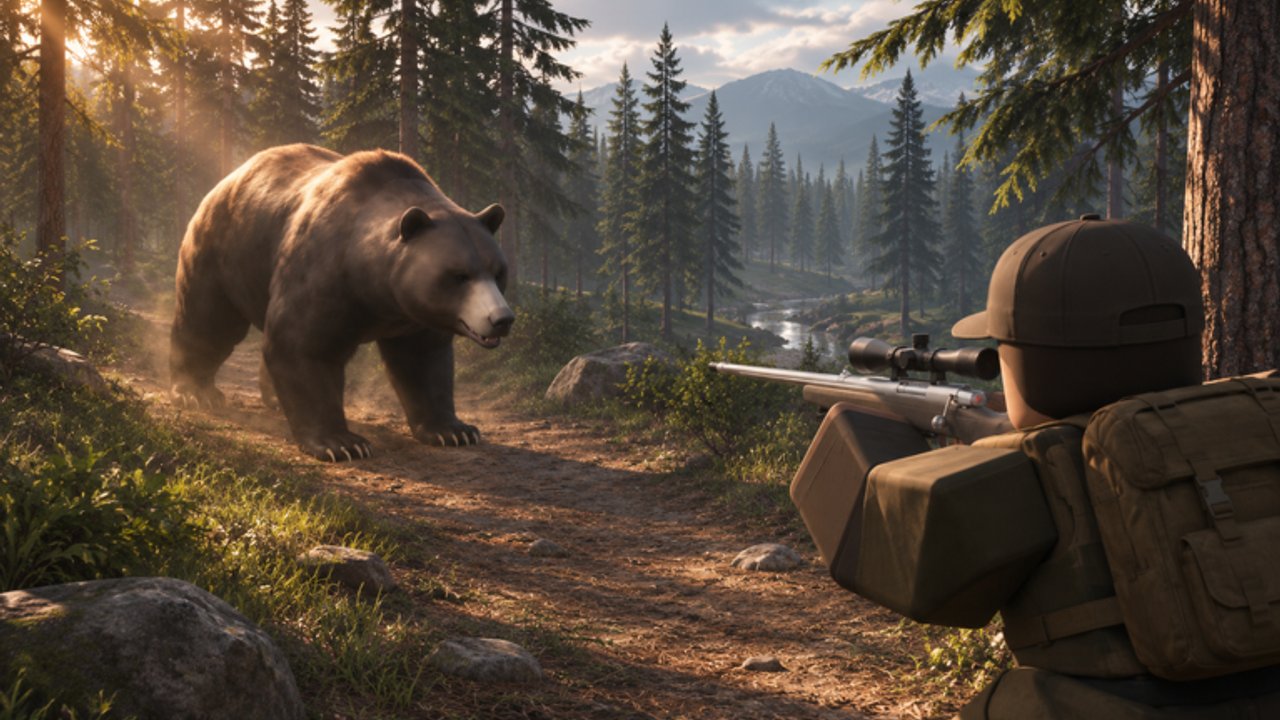
Tracks, blood, wind, and noise are the four pillars that separate accidental kills from intentional hunts in Realistic Hunting. This guide teaches you to read footprints, interpret blood after the shot, stay downwind, and keep the noise meter honest. It is the natural sequel to Getting Started and controls.
Reading footprints and trail language
Fresh prints look sharper and cut deeper in soft ground. Older prints blur. Spacing tells gait: calm walk versus alarmed bound. Directional tips of the track point the way the animal moved—follow that vector, but glass ahead so you do not walk onto a bedded moose.
Group size hints matter. Multiple overlapping deer tracks can mean a small herd; pushing the center often explodes in every direction. Skirt the edge, keep the wind in your face, and pick one animal. Skills that enrich track inspection are worth early points—more info on sex, group size, or freshness saves wasted kilometers.
Blood trails after the shot
Mark the impact site the moment you fire. Even if the animal vanishes, that spot is where blood should begin. Wait briefly; charging immediately can push a still-mobile animal farther.
Blood character is a story:
- Dark, steady drops often mean a solid body hit—keep a measured pace.
- Sparse, bright flecks may mean a marginal hit—slow down, glass more, prepare a careful follow-up.
- Trails that climb into thick cover need crouch movement and patience; do not ATV through the evidence.
If the trail goes cold, spiral outward from the last drop instead of sprinting a straight guess. Partners can grid-search using callouts from the Players Hub without stomping the same line twice.
Wind as a second minimap
Wind carries your scent into animal noses. The on-screen wind indicator is not decoration—rotate until the breeze hits your face relative to the animal’s position. If wind flips mid-stalk, pause and relocate. A perfect crouch means nothing when you are upwind of a bear.
Practical rules:
- Glass from downwind ridges first.
- Circle wide rather than cutting the short upwind path.
- Park the ATV downwind and far; engines plus scent is a double fail (ATV and travel).
- In co-op, the upwind player is the liability—reassign who leads the stalk.
Noise meter discipline
Noise compounds wind mistakes. Sprint, jump, and close-range ATV use light the meter. Crouch walking and still aiming keep it calm. Firearms add a burst—suppressors and shot timing matter when other animals linger nearby. After a loud miss, expect the valley to reset; do not “chase the echo” blindly.
Combine meter checks with stance habits from the controls guide. If the meter spikes while you thought you were quiet, stop and reassess before the next ten steps.
Species-specific tracking notes
- Deer — Ideal teachers. Trails are common; mistakes are cheap. Use them to practice wind circles.
- Elk — More punishing when spooked; longer blood runs possible. Bring a caliber respected on the weapons tier list.
- Moose — Big bodies, big consequences for poor shot placement. Confirm wind twice before the final push.
- Bears — Tracking a wounded predator is a risk assessment. Have a follow-up plan and a partner lane. See danger context on the animals tier list.
Rare coats use the same physics with higher emotional stakes—apply this page before the patience routes in rare animals.
Tools and skills that sharpen tracking
Invest in skills that:
- Highlight tracks at greater distance
- Reveal estimated health from blood inspection
- Clarify vocalization direction when animals call
- Reduce sway so your first shot starts a short trail instead of a marathon
Challenges that require clean harvests or specific trail follow-ups are excellent practice contracts. Complete them before vanity cabin goals in cabin and trophies.
Common failures (and fixes)
Failure: Walking the blood trail at sprint.
Fix: Crouch, head on a swivel, meter low.
Failure: Approaching from the scenic upwind overlook.
Fix: Take the ugly downwind circle every time.
Failure: Shooting into brush without a backstop plan.
Fix: Wait for a shoulder window; missed shots create the worst trails.
Failure: Letting a random claim your trail.
Fix: Call “trail mine” early; hop servers if the culture is toxic.
Field drill session (30–40 minutes)
- Find any fresh track without shooting; follow for five minutes downwind only.
- Break off, circle, and reacquire.
- Take one ethical shot on a deer.
- Wait, then follow blood to the animal using only crouch movement.
- Journal what the meter and wind did at each stage.
Repeat after patches—AI and indicator clarity can shift (patch notes).
Ethics and scripts
ESP scripts that paint animals through terrain delete the skill this guide teaches and risk bans (Scripts Hub). Codes will not replace wind knowledge either, though free currency from the Codes Hub can buy better optics once promos exist.
Master tracking and wind, and the forest stops feeling random. Every print becomes a sentence, every breeze a warning, every quiet step a vote for a shorter blood trail and a cleaner mount on the cabin wall. Continue through the Guides Hub when you are ready for travel logistics and trophy display.
Frequently Asked Questions
Quick answers for hunters learning Realistic Hunting on Roblox.
Should I follow a blood trail immediately after the shot?
Mark the hit site, wait a short beat so you do not push a still-standing animal, then follow carefully in a low stance.
What does hunting downwind mean?
Keep the wind blowing from the animal toward you so your scent travels away from its nose.
Why do animals flee when I feel silent?
You are probably upwind, your noise meter spiked, or a teammate advertised the party. Check wind and stance first.
Do skills really help tracking?
Yes. Skills that extend track visibility or read blood health save time and prevent lost harvests.